Weaning your baby onto solid foods: a guide for parents
You may find yourself wondering whether your baby is ready, worrying about choking, questioning which foods to start with, or feeling unsure about whether you are doing things “the right way”.
It’s completely normal to feel a mix of anticipation and apprehension at this stage. Feeding is deeply connected to care, safety and nurturing, so it makes sense that parents want to get it right. Added to this, advice can feel conflicting: purées versus finger foods, baby-led weaning versus spoon-feeding, what to offer first, what to avoid, and when to move on.
The truth is that weaning your baby onto solid foods is not a single moment or a test to pass, but a gradual process that unfolds over time. It’s about supporting your baby to explore new tastes and textures at a pace that feels right for them, while maintaining milk feeds as their main source of nutrition during the first year.
This blog offers practical reassurance about what weaning really involves, what matters most in the early stages, and how you can approach this transition with confidence rather than pressure. It is designed to answer the question, “Is this normal?”, and gently open the door to “What can I do?” without overwhelm.
What Parents Need to Know About Weaning
Weaning is a gradual transition, not a sudden change
One of the most helpful ways to think about weaning is as a transition, rather than a switch from milk to meals. During the early months of weaning, solid foods complement breast milk or formula, they don’t replace them.
At around six months, babies’ nutritional needs begin to change. Iron stores start to reduce, and babies are developmentally ready to begin exploring food alongside milk feeds. Weaning supports:
Growing nutritional needs, particularly iron
Development of chewing and swallowing skills
Exposure to a wide range of flavours and textures
Early foundations for positive eating habits
Importantly, weaning is as much about learning and experience as it is about intake. Touching food, tasting it, spitting it out, and trying again are all part of the process.
Readiness matters more than age alone
Although six months is often referenced as the ideal time to start, readiness varies from baby to baby. Babies who are ready for weaning typically show a combination of physical and behavioural signs, such as being able to sit upright with support, having good head control, and showing interest in food.
Starting too early can increase frustration and discomfort, while waiting for readiness helps babies (and parents) feel more confident when new foods are introduced. Trusting your baby’s developmental cues can remove much of the pressure parents feel at this stage.
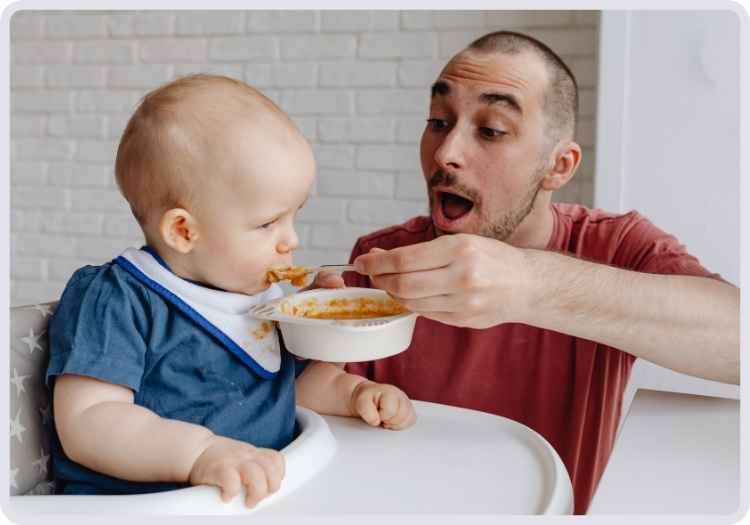
Babies are more receptive to new experiences when they feel secure, unhurried and comfortable.
Practical Support for Weaning
Creating the right environment
A calm, predictable environment can make a huge difference when weaning your baby onto solid foods. Babies are more receptive to new experiences when they feel secure, unhurried and comfortable.
It can help to:
Offer solids at a time when your baby is alert and content
Sit your baby upright and ensure they are well supported
Keep mealtimes relaxed and free from distractions
Expect mess and exploration - this is part of learning
Approaching weaning with patience and a relaxed attitude sets the tone for your baby’s relationship with food.
Starting with simple foods
Early weaning foods are usually single-ingredient options that are easy to digest and simple to prepare. Many families begin with vegetables such as sweet potato, carrot or parsnip, followed by fruits like apple, pear or banana.
Offering foods one at a time allows babies to become familiar with new flavours and textures gradually. It also helps parents notice how their baby responds, without needing to rush variety too quickly.
It’s common for babies to need multiple exposures before accepting a new food. Rejection doesn’t mean dislike, it often means the flavour or texture is unfamiliar.
Purées, finger foods, or both?
Parents are often presented with an either/or choice between traditional spoon-feeding and baby-led weaning. In reality, many families naturally find a combination approach works best.
Some babies enjoy smooth purées initially, while others prefer exploring soft finger foods. What matters most is that food is offered in a way that is safe, developmentally appropriate, and responsive to your baby’s cues.
There is no single “correct” method. Flexibility allows you to adapt as your baby’s confidence and skills develop.
Everyday Weaning Moments
A parent offers their baby a spoonful of mashed sweet potato. The baby opens their mouth, tastes it, then pushes it back out with their tongue. Nothing happens on the second attempt either, but by the fourth or fifth time, the baby leans forward with curiosity.
Another baby eagerly picks up a soft piece of steamed carrot, squeezes it, drops it, then brings it to their mouth. Very little is eaten, but the experience is rich with learning.
A family notices their baby gagging when trying a new texture. They pause, stay calm, and allow their baby to manage it independently. Over time, confidence grows and gagging reduces.
One parent noticed that their baby happily accepted fruit purées but consistently turned away from vegetables. After a few attempts, the parent worried they had “done something wrong” by offering sweeter flavours first. Rather than removing vegetables altogether, they continued to offer small tastes of savoury foods alongside familiar options, without pressure or comment. Over time, their baby began to tolerate the flavour, then accept a few spoonfuls, and eventually showed interest independently. The turning point wasn’t a change in strategy, it was patience, repetition and a calm approach that allowed familiarity to grow.
Common Worries When Weaning Your Baby Onto Solid Foods
Gagging versus choking
Gagging often worries parents, but it is a normal protective reflex as babies learn to manage new textures. It looks and sounds dramatic, but it is different from choking. Staying calm and allowing babies to work through gagging helps them build confidence and skill.
Learning how to recognise the difference between gagging and choking can significantly reduce anxiety during mealtimes.
Food refusal
Babies may turn their head away, clamp their mouth shut, or push food away. This doesn’t mean you’ve done something wrong. Babies’ appetite and interest can vary day to day.
Offering food without pressure, keeping milk feeds consistent, and returning to foods later often leads to gradual acceptance.
Mess and play
Weaning is messy by nature. Squashing food, smearing it, or dropping it repeatedly are all ways babies explore texture, temperature and cause-and-effect. Allowing this exploration supports learning and confidence, even if very little food is swallowed initially.
Am I Doing This Often Enough?
A worry many parents express is whether they are offering solid foods often enough, especially in the early weeks. Some parents worry that missing a day, skipping a meal, or prioritising milk feeds means they are falling behind.
In reality, early weaning does not require rigid schedules. Babies are still learning what food is, how it feels in their mouth, and how eating fits into their day. Illness, tiredness, growth spurts or changes in routine can all temporarily affect interest in solids.
What matters more than frequency is consistency over time, rather than perfection in any single week. Offering regular opportunities for food exploration, while maintaining milk feeds and responding to your baby’s cues, supports a healthy and flexible relationship with food.
If solids occasionally take a back seat, that doesn’t undo progress. Weaning your baby onto solid foods is a long-term journey, not something that can be derailed by a few missed meals.
Frequently Asked Questions
When should I start weaning my baby onto solid foods?
Most babies are ready around six months, but readiness signs are more important than age alone.
What if my baby isn’t interested in food?
Interest often develops gradually. Continuing milk feeds and offering food without pressure allows curiosity to grow naturally.
How much should my baby be eating at the start?
Very small amounts. Early weaning is about exposure and experience, not quantity.
Should I worry if my baby gags?
Gagging is normal and expected as babies learn to manage textures. It usually reduces with experience.
Do I need to choose between baby-led weaning and purées?
No. Many families use a flexible approach that responds to their baby’s preferences and development.
What foods should I avoid?
Foods high in salt or sugar, honey under 12 months, and foods that pose a choking risk should be avoided or adapted appropriately.
How do I know if my baby is getting enough nutrients?
Milk feeds remain the main source of nutrition during the first year. Gradual inclusion of iron-rich foods supports growing needs.
What if weaning feels stressful for me as a parent?
Weaning can feel emotionally demanding, especially when combined with tiredness, advice overload or worries about doing things “right”. Taking a step back, keeping expectations realistic, and focusing on the long-term journey rather than individual meals can help reduce pressure. Supportive guidance and reassurance can make a big difference during this stage.
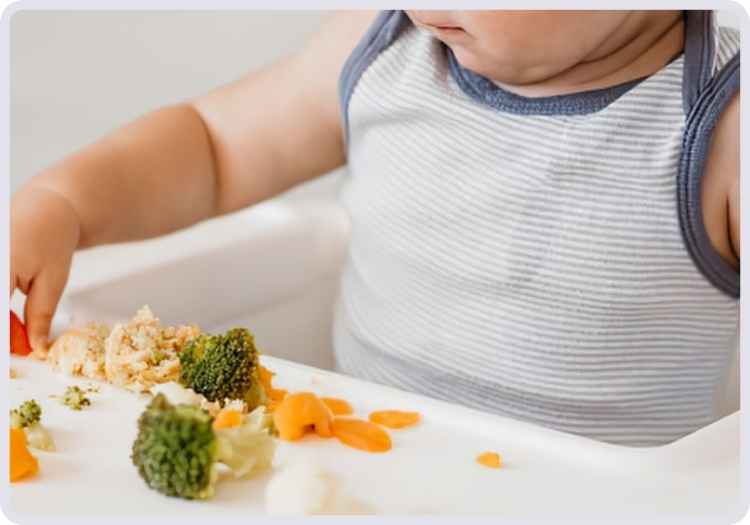
Self-feeding supports independence and confidence.
Encouraging Positive Mealtime Habits
Encouraging positive mealtime habits during weaning isn’t about how much your baby eats: it’s about how mealtimes feel. The atmosphere you create around food in the first year lays important foundations for how your child approaches eating later on.
One of the most powerful habits you can support is listening to hunger and fullness cues. Babies are naturally good at regulating their intake when they are allowed to stop when full and eat when hungry. Avoiding pressure to “finish” food helps babies stay tuned into their own bodies and builds trust around eating.
Self-feeding, whether through finger foods or allowing your baby to hold a spoon, supports independence and confidence. Even when very little food is eaten, these experiences help babies practise co-ordination, explore textures and feel in control of their eating.
Family mealtimes, where possible, are another valuable influence. When babies sit with others and observe eating as a shared, relaxed activity, they learn through watching as much as tasting. Seeing adults eat a variety of foods calmly and without comment creates a powerful, reassuring message.
It’s also helpful to keep mealtimes:
Short and predictable, rather than drawn out
Calm, without distractions or pressure
Flexible, allowing appetite to vary day to day
Messiness, dropped food and playful exploration are all signs of learning. Allowing babies to explore food freely reinforces routine without turning eating into a battle.
Above all, positive mealtime habits grow when adults remain calm and responsive. Babies sense tension quickly, and relaxed adults help food feel safe, enjoyable and worth exploring.
Conclusion
Weaning your baby onto solid foods is not about perfection, fast progress or ticking off stages. It is a gentle, evolving journey shaped by your baby’s development, temperament and experiences.
This blog aims to reassure you that uncertainty is normal, mess is expected, and progress looks different for every baby. It answers the question, “Is this normal?”, and begins to explore “What can I do?”.
For parents who want deeper understanding, clearer guidance across the stages of weaning, and more real-life examples to return to when doubts arise, our eBook Weaning Your Baby Onto Solid Foods offers that next layer of support. It explores readiness, first foods, allergens, common challenges and positive mealtime habits in greater depth, helping you feel confident and reassured as you and your baby find your rhythm together. It’s designed not as a set of rules, but as a companion; one you can return to again and again, knowing that you’re supporting your baby with patience, care and confidence, one meal at a time.
If weaning ever feels overwhelming, it can help to pause and remember that every baby - and every parent - learns together over time. Confidence doesn’t come from doing everything perfectly, but from understanding your baby’s cues, trusting the process, and knowing that progress is built through repeated, everyday experiences.
Weaning Your Baby Onto Solid Foods
34-page PDF eBook
Turn a daunting milestone into a joyful adventure for you and your baby.