Helping your child learn through play: why play really is how young children learn
Many parents quietly worry that play isn’t “enough”. In a world where school readiness, early milestones and online advice can feel overwhelming, it’s easy to question whether helping your child learn through play is really supporting their development in the right way. You might wonder if you should be introducing letters earlier, planning activities with clearer outcomes, or stepping in to guide your child’s play more often so it feels purposeful.
These worries are incredibly common. They don’t mean you’re doing anything wrong: they usually mean you care deeply about supporting your child well.
The reassuring truth is that helping your child learn through play doesn’t require turning your home into a classroom or filling your day with structured tasks. For young children, play is how learning happens. Through play-based learning, children explore ideas, practise skills, test boundaries, build confidence and make sense of the world around them.
Our eBook Helping Your Child Learn Through Play unpacks what learning through play really means, why it matters so much in the early years, and how you can support it in everyday ways: without pressure, guilt or unrealistic expectations.
What Parents Need to Know About Learning Through Play
Play doesn’t need to look educational to support learning
One of the biggest misconceptions about learning through play is that it needs to look impressive or obviously “teaching” something to be valuable. In reality, the learning that matters most in the early years often happens during play that looks simple, repetitive or even chaotic.
Young children’s brains develop through hands-on experience. They learn by touching, moving, experimenting, repeating actions and noticing what happens next. Learning through play allows children to follow their curiosity at their own pace, returning to ideas again and again until understanding deepens.
When a toddler repeatedly fills and empties a container, they’re exploring cause and effect. When a child stacks blocks and knocks them down, they’re learning about balance, gravity and resilience. When a cardboard box becomes a car, a house or a boat, they’re developing imagination, language and flexible thinking.
These experiences may not come with a finished product or a clear outcome, but they build the foundations for later learning far more effectively than early formal instruction.
Play-based learning supports emotional and social development
Helping your child learn through play isn’t only about cognitive skills. Play is one of the main ways young children process emotions, practise social interactions and build a sense of confidence.
Children often use play to work through experiences they don’t yet have the language to explain. Acting out everyday routines, repeating familiar scenarios or inventing imaginative worlds can all be ways of making sense of feelings, relationships and events.
Through play-based learning, children practise:
Managing frustration when something doesn’t work
Trying again after setbacks
Understanding actions and consequences
Communicating needs and ideas
Understanding others’ perspectives
Feeling capable and in control
These emotional foundations are just as important as academic skills, and play offers a safe, natural space for them to develop.
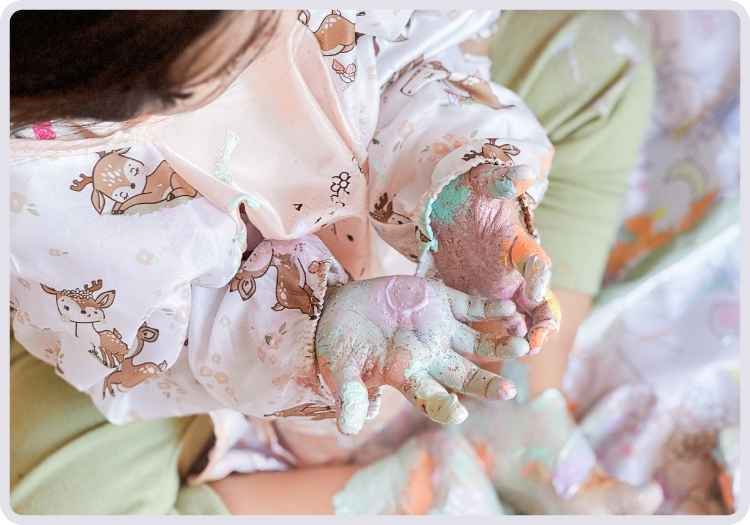
Messy play supports sensory development, creativity, emotional regulation and confidence.
Practical Ways to Support Learning Through Play (Without Pressure)
Protect time for uninterrupted play
One of the most powerful ways to support learning through play is simply protecting time for it. Children need space to become absorbed, to repeat actions and to develop ideas fully. When play is constantly interrupted or rushed, learning stays on the surface.
Uninterrupted play doesn’t need to last for hours. Even short periods where children are free to explore without adult direction can make a big difference to play-based learning.
It can help to:
Reduce unnecessary transitions during play
Allow play to continue if your child is deeply engaged
Resist the urge to step in too quickly when challenges arise
Stepping back slightly allows children to build persistence, problem-solving skills and confidence in their own ideas. Adults can learn a lot about a child’s current interests and focus by quietly observing them before deciding whether to step in or leave them to explore uninterrupted.
Use everyday objects to encourage learning through play
You don’t need a house full of toys to support helping your child learn through play. In fact, everyday objects often invite deeper thinking than toys with a fixed purpose.
Items such as pots, wooden spoons, fabric, boxes, natural materials (such as twig, pine cones or pebbles) and loose parts (for example some old curtain rings, clothes pegs or empty food tins) can be used in countless ways. Because there’s no “right” way to use them, children are free to experiment, adapt and create their own ideas.
This kind of open-ended play supports:
Creativity and imagination
Flexible thinking
Problem-solving
Independence
It also reduces pressure - both for children and adults - because there’s no expected outcome to meet. Time can be spent exploring and letting imagination flow.
Support play without taking control
Adults play an important role in learning through play, but that role doesn’t need to involve leading activities or directing outcomes. Often, the most helpful support comes from being nearby, observing and responding thoughtfully.
Simple, descriptive comments can support play-based learning without interrupting it:
“You’re working hard to balance that.”
“I can see you’re trying a different way.”
“That didn’t work, what might you try next?”
These responses show interest and encouragement while leaving control with the child.
When play finishes, supporting children to put it back where it belongs helps build independence, responsibility and respect for their environment: all valuable life skills developed naturally through play.
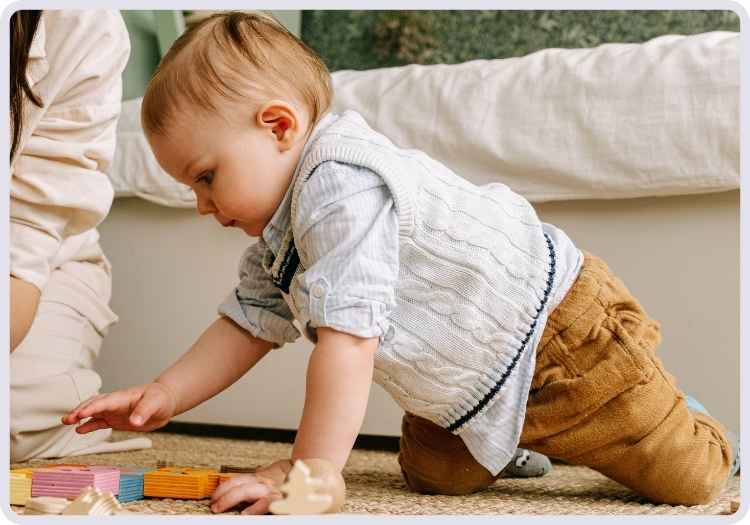
Allowing your child to solve a problem themselves provides them with a sense of achievement.
Everyday Play Moments Parents Recognise
A toddler drops a spoon from their highchair again and again, watching it fall and waiting for it to be returned. This isn’t defiance or boredom, it’s learning through play. The child is exploring gravity, anticipation and social interaction all at once.
A two-year-old spends several minutes trying to fit a shape into a container, turning it, flipping it and trying again. An adult stays nearby but doesn’t step in. When the shape finally fits, the sense of achievement is huge and the learning is lasting: much more impactful than if the adult had done it for them.
A preschooler sets up a pretend café, carefully arranging cups, menus and food. Through imaginative play, they practise language, sequencing, counting, social roles and confidence; even if nothing happens “properly”.
These moments can be easy to overlook, especially on busy days. Yet they are full of rich learning through play that builds gradually, experience by experience.
Why Helping Your Child Learn Through Play Matters More Than Early Academics
It’s natural to worry about preparing children for the future. Many parents feel pressure to focus on early reading, writing or numbers, fearing their child might fall behind.
However, the strongest foundations for learning come from:
Curiosity
Confidence
Emotional security
Willingness to try
Ability to cope with mistakes
Helping your child learn through play nurtures all of these. Children who feel confident exploring, questioning and problem-solving are better equipped for formal learning later on. They approach challenges with resilience rather than fear, and they’re more likely to enjoy learning rather than feel anxious about getting things right.
Learning through play doesn’t delay development: it actively supports it.
Frequently Asked Questions
Is it normal if my child doesn’t play the same way as others?
Yes. Children play differently depending on their interests, temperament and stage of development. There is no single “right” way to learn through play.
Should I be more involved in my child’s play?
Sometimes joining in can be lovely, especially when your child invites you. Other times, observing quietly supports independence and play-based learning.
What if my child moves quickly between activities?
Short bursts of play are common, particularly for younger children. Attention develops gradually through experience, movement and play.
Do children really learn without adult-led activities?
Yes. Child-led play is central to learning through play, allowing children to practise decision-making, persistence and problem-solving naturally. Children are more likely to learn from things that interest them, rather than things that the adult wants them to do.
Is messy play important for learning?
Very much so. Messy play supports sensory development, creativity, emotional regulation and confidence; all key parts of learning through play.
What if my child doesn’t seem interested in playing?
Some children need time, reassurance or a calm environment before play emerges. Sitting alongside without pressure often helps curiosity grow.
How does learning through play support school readiness?
Learning through play builds concentration, communication, independence and confidence: all essential foundations for later learning.
Conclusion
Helping your child learn through play isn’t about doing more, achieving more or filling every moment with activities. It’s about understanding what already matters, and trusting the learning that’s already happening.
Play doesn’t need to be perfected, corrected or constantly improved. It needs time, trust and supportive adults who recognise its value.
This blog answers the questions many parents ask: “Is this normal?” and “Am I doing enough?” It begins to explore “What can I do?” in practical ways.
For parents who want deeper understanding, more real-life examples and guidance they can return to again and again, the Helping Your Child Learn Through Play eBook offers that next layer of support. It explores learning through play across ages and stages, helps you recognise learning in everyday moments, and provides reassurance when doubts creep in.
It’s not an instruction manual. It’s a companion: designed to walk alongside you as your child grows, reminding you that meaningful learning is already unfolding, one playful moment at a time.
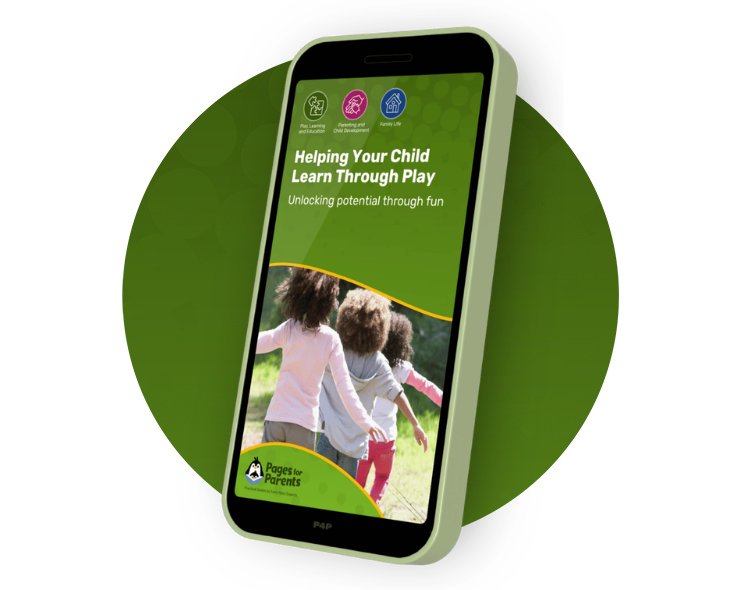
Helping Your Child Learn Through Play
29-page PDF eBook
Create a connected, playful home where your child's confidence can flourish.